AI vervreemdt niet, maar verbindt juist
By Eva Huitink
Photography: Beleidsadviseur VGN
The term ‘artificial intelligence’ (Ai) still arouses suspicion among many. I understand that. We are inundated with messages about risks, ethical dilemmas and science fiction-like doom scenarios. Of course, we must remain critical and think carefully about the use of new technology. But what I see in the practice of disability care is something very different from fear and controversy. I see energy, passionate people and applications that can really make a big difference.

Floow.ai
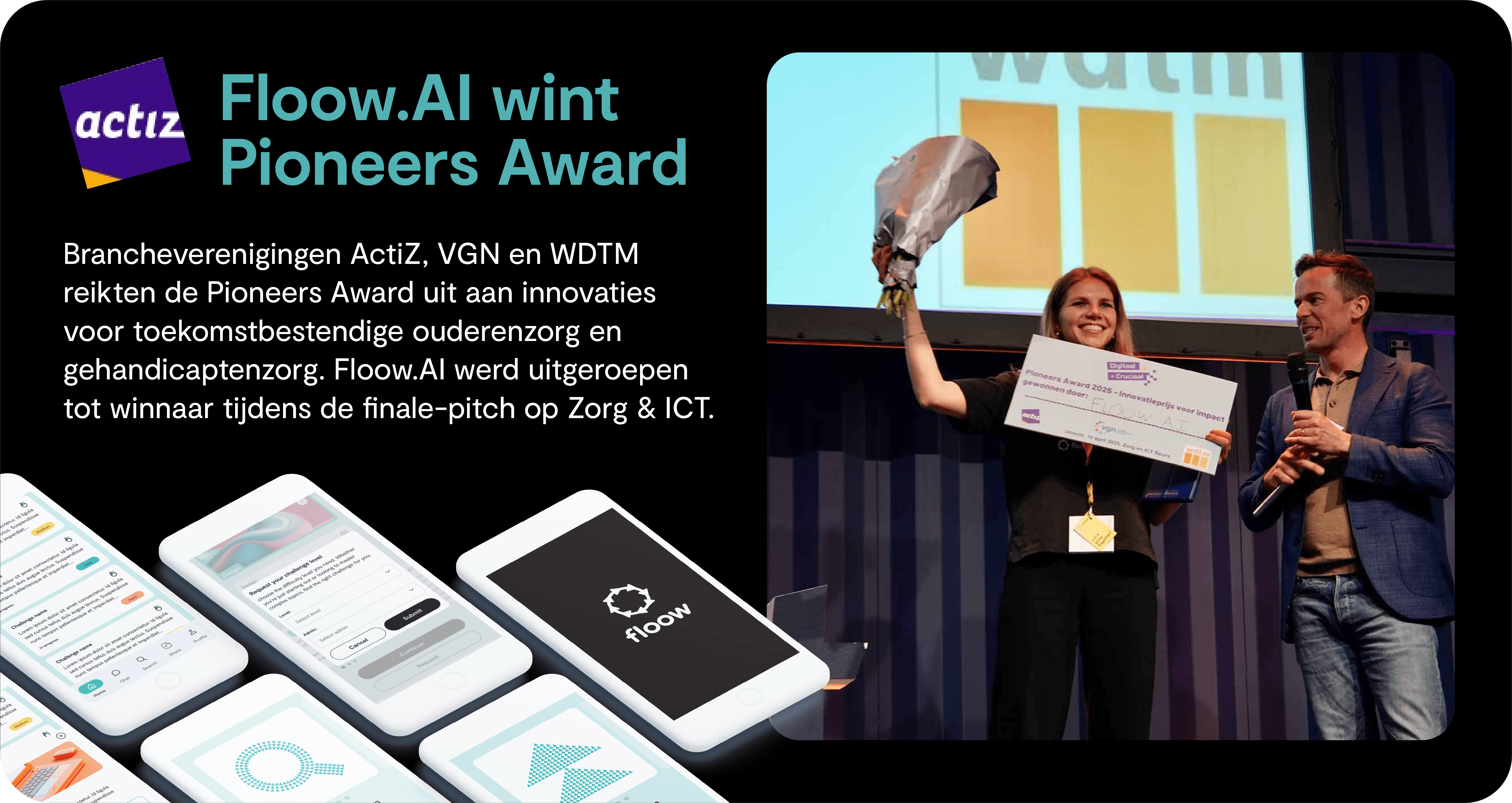
The shortage of staff in healthcare is dire. Fortunately, more and more people – from students to lateral entrants – want to retrain as healthcare professionals. On that path to competence, these well-intentioned people encounter a lot of paperwork, rules and slow processes. Floow.ai offers a promising solution, without all that hassle.
With the help of a mobile application with Ai-driven learning modules, employees can learn and grow directly on the work floor. The app adapts the learning path to someone’s experience, includes real-time certification management and drastically reduces the administrative burden. Everything revolves around practice-oriented learning in collaboration with vocational education and healthcare organizations. This not only accelerates the learning process, but also gives users the good feeling more quickly: I belong, I can do this.
Snappie
Drawing up a support plan takes a lot of time and energy. Time that you would rather spend on the client. With this in mind, Snappie was developed, an AI tool that automatically draws up a support plan based on input from supervisors, clients and their network.
Snappie is safe, user-friendly and flexible. That makes this tool unique. Supervisors can always check and adjust the text themselves, without the need to enter complicated commands. The Ai does the thinking and the human remains in control. The result? Less administrative pressure, high substantive quality and more room for personal attention. Snappie was created through collaboration between developer The innovation playground and PSW, an organisation for people with a (mental) disability and a support need.
Mo-online.nl
A knowledge platform in development, especially for people with an intellectual disability. Mo-online.nl will have no thresholds, no login or confusion, but reliable and understandable information. This will consist of a strong online community and interactive learning and development opportunities.
And: there will also be a smart digital assistant Noah. He will, among other things, provide answers to questions from the virtual meeting room MoTown with the help of generative AI. This makes information more accessible and personal. Noah’s response is, among other things, tailored to the knowledge of experienced experts and employees at Philadelphia care. This platform helps people with a disability to make independent choices. It does not create distance, but rather proximity.
Tool, not a goal
The common thread? These three initiatives do not use Ai to replace humans, but to strengthen humans. And that is how it should be. Because it is not about high-tech, it is about learning better, supporting better, connecting better. My message: remain critical of new technology, but also maintain optimism. When I look at these pioneers alone, I mainly see opportunities. For people with disabilities, for professionals, for the entire sector.